

Diagnose my counter
It doesn't look like the day it went in.
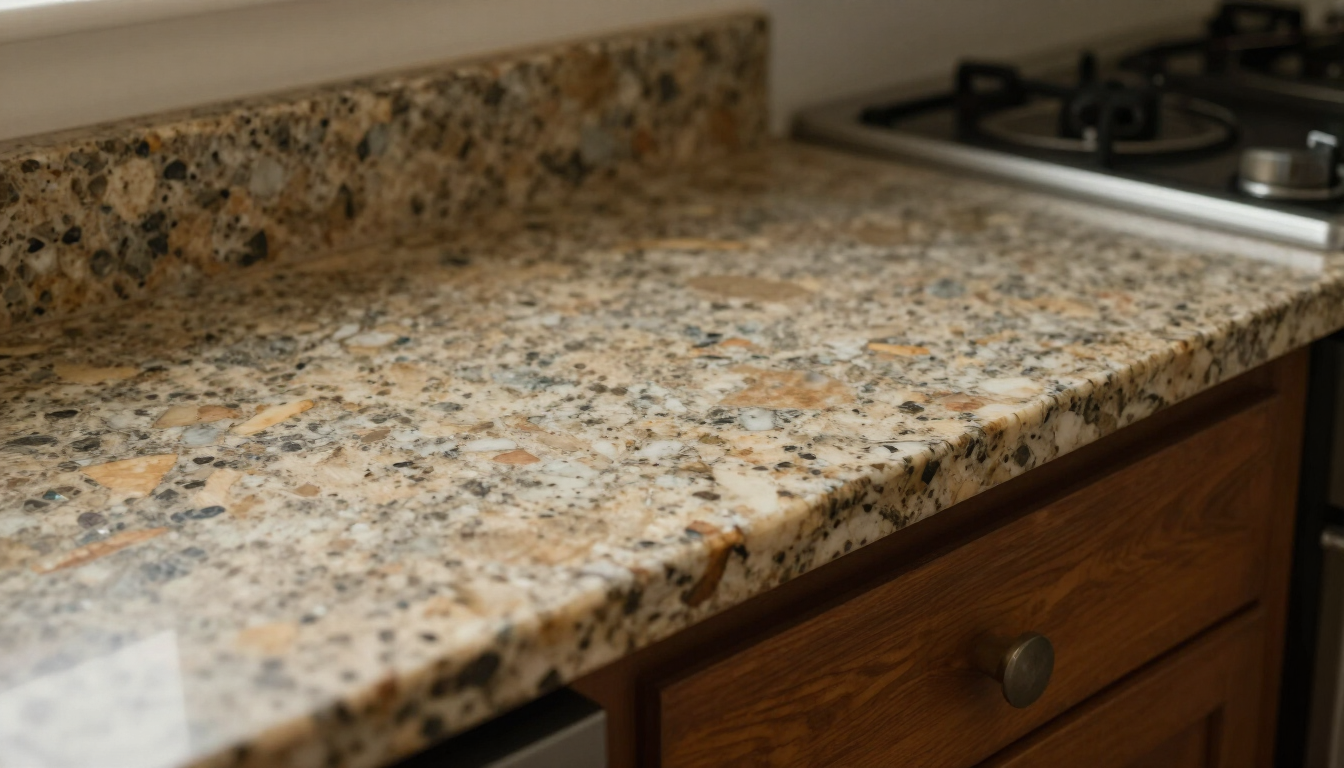
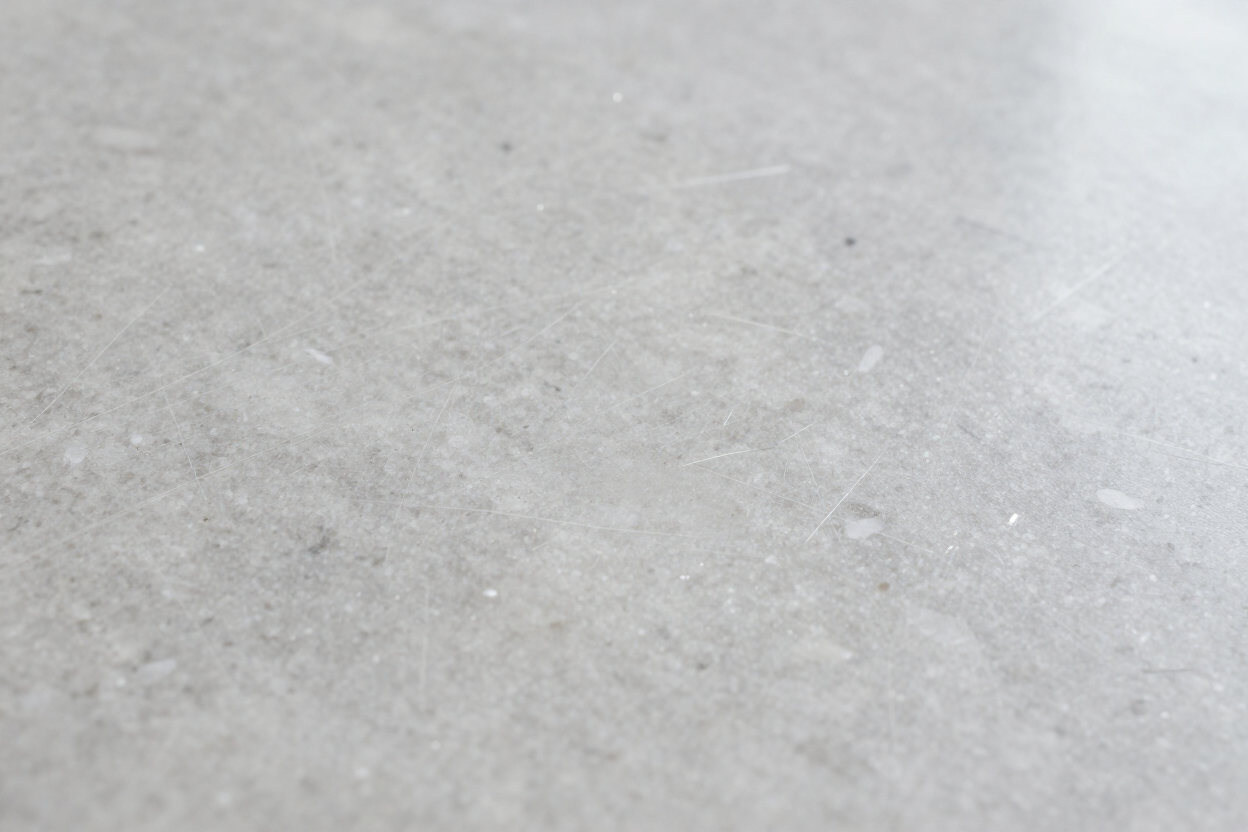
Not one spot. The whole top. Hazy, a little scratched, flat where it used to reflect. Nothing you clean with changes it. That's not dirt and it's not age. It's a finish that's been worn, coated, or attacked, and in almost every case it's still under there.
What "lost its shine" actually means
The shine on stone isn't a coating. It's the surface itself, ground and polished so fine that it reflects light. Anything that scratches that surface at a microscopic level, or puts a film on top of it, kills the reflection. The stone underneath is fine. The top layer isn't.
Four things do it, and most tired counters have more than one going on: wear in the zones you use most, grit dragged under pots and dishes, cleaners that were too harsh or too abrasive, and store products that were supposed to add shine and built up into a cloud instead.
Did you know? The "polish" in a spray bottle isn't polishing anything. It's a wax or a topcoat. The first coat looks great. The tenth is the haze you're looking at now.
Which stone, which cause
Marble
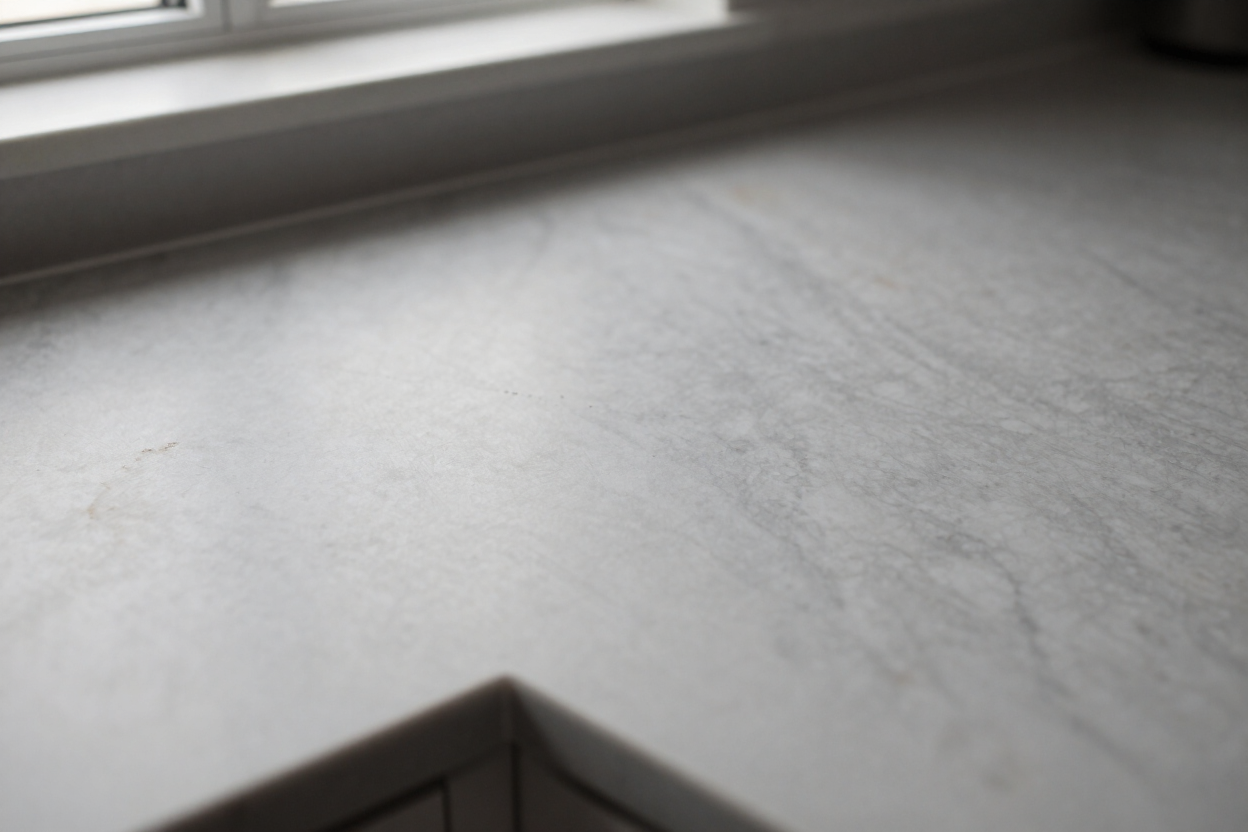
Flat, cloudy, dull in a wide patch around the sink, the stove, the coffee station.
On marble, a whole top losing its shine is usually etching, everywhere at once. An acidic cleaner used for months does the same thing a lemon does in a minute, just across the entire surface. Add normal wear and it reads as "old." It isn't. The polish is re-cut and rebuilt, and the top comes back to install day.
● Pro: the whole surface, re-honed and re-polished in steps
Granite
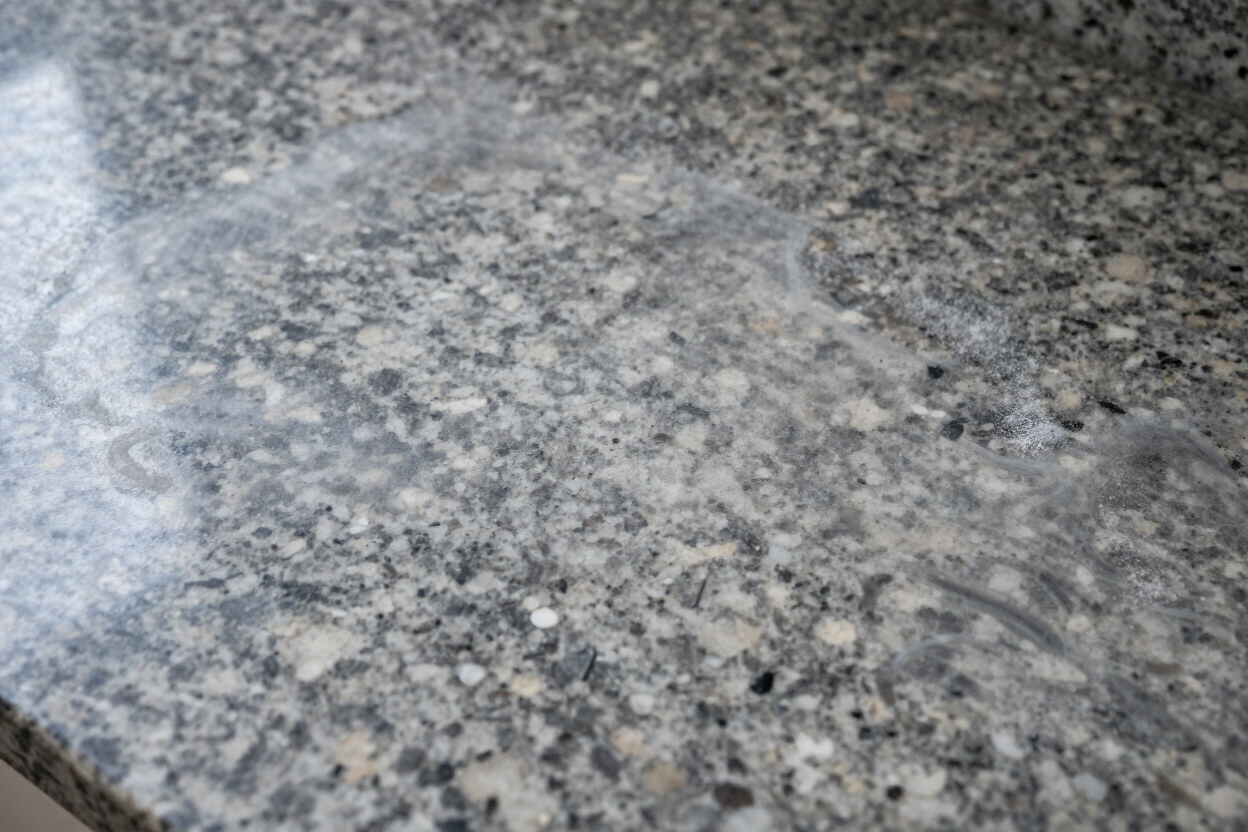
Hazy or streaky, especially in raking light. Sometimes a sticky feel.
Granite doesn't etch from kitchen acids, so a dull granite top is one of three things: a film of topcoat or "polish" product built up over time, hard-water and soap residue, or the finish itself worn down by abrasive pads and gritty pans. The first two strip off. The third is re-polished.
● Homeowner: strip buildup and residue with a stone-safe cleaner and a soft cloth, then look again in good light
● Pro: if it's still flat after that, the finish is worn and it gets re-polished
Quartzite
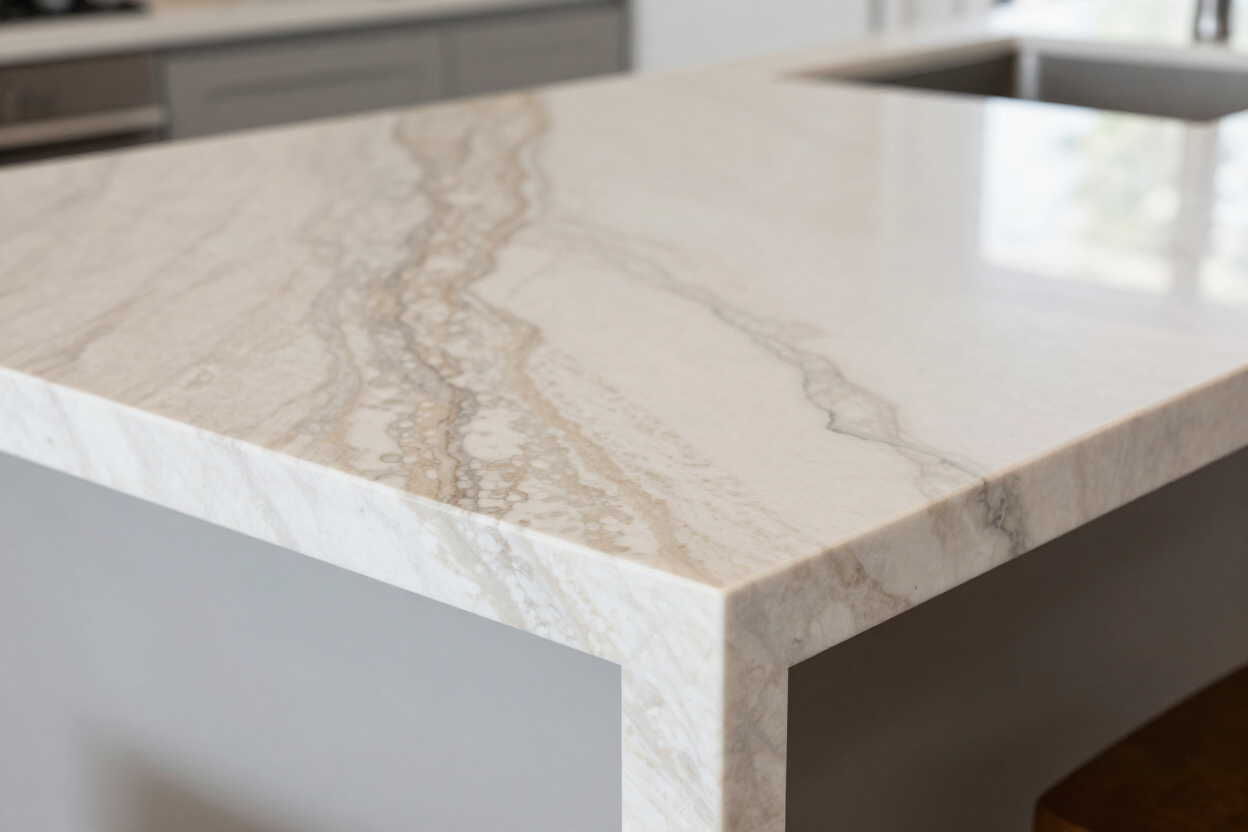
Looks like marble losing its shine, on a stone you were told was tougher than granite.
True quartzite is that tough, and a dull true quartzite is a worn or coated finish, same as granite. A lot of what's sold as quartzite is a marble-family stone, and that dulls like marble: acid, everywhere, over time. We test the stone before we touch it, because the two are fixed differently.
● Pro: stone test first, then the right fix for what it actually is
Quartz (engineered)
Fine scratches, a flat patch near the stove, a dull sheen that cleaner doesn't change.
The shine on quartz is the factory finish on the resin. It doesn't wear like stone, but it does scratch, and heat and harsh chemicals mark it. Some of that polishes out. Some is in the resin and stays. We'll tell you which is which before any work begins.
● Pro: all of it. Home polishing products cloud quartz.
Did you know? A cutting board doesn't just protect the counter from the knife. The grit on the bottom of a dragged pot or a ceramic dish does more damage to a polish than a blade ever will.
What have you already tried?
This is the part that decides what the fix is.
- Nothing yet. Good. Wipe it with a stone-safe cleaner and a soft cloth and look at it in low, angled light. That's what we'd do first.
- Granite or stone "polish" from the store. Stop using it. It's a topcoat, and the haze is the buildup. On granite, stripping it back off is the first move and you can do that yourself.
- A scrub pad, a "magic" eraser, or a powdered cleanser. That's what dulled it, or made it worse. The finish is scratched and it gets re-polished.
- Vinegar, lemon, or an all-purpose spray with acid in it, on marble or quartzite. That's the cause. Stop here. The whole surface has to be rebuilt, and the sooner it's done, the smaller the job.
- More sealer. Sealer isn't shine. It goes into the pores. It can't fix a surface.
Did you know? The shine isn't something on your stone. It's the stone itself, ground so fine it reflects. That's why it can be brought back and why nothing in a bottle can do it.
How the finish is brought back
The same way it was made. The surface is re-cut with diamond abrasives in steps, coarse to fine, until the worn or damaged layer is gone and the reflection is rebuilt, evenly, edge to edge. Then it's sealed. A top that's only worn at the sink and the stove is a smaller job than a top that's been etched or scratched all over. Either way, nothing is applied. What you get back is the stone.
Send a photo. See it shine.
Your own counter, finish back, in your inbox. Plus what dulled it and what we'd do. No visit, no pressure.