

Quartzite care
Your quartzite is either the toughest stone in the house or it isn't quartzite.
Real quartzite doesn't etch and outlasts granite. A lot of stone sold as quartzite is a marble-family stone with the same look, the same price tag, and the opposite behavior. If your "quartzite" has rings where glasses sat, that's almost always why. Before anything else, we find out which one you have.
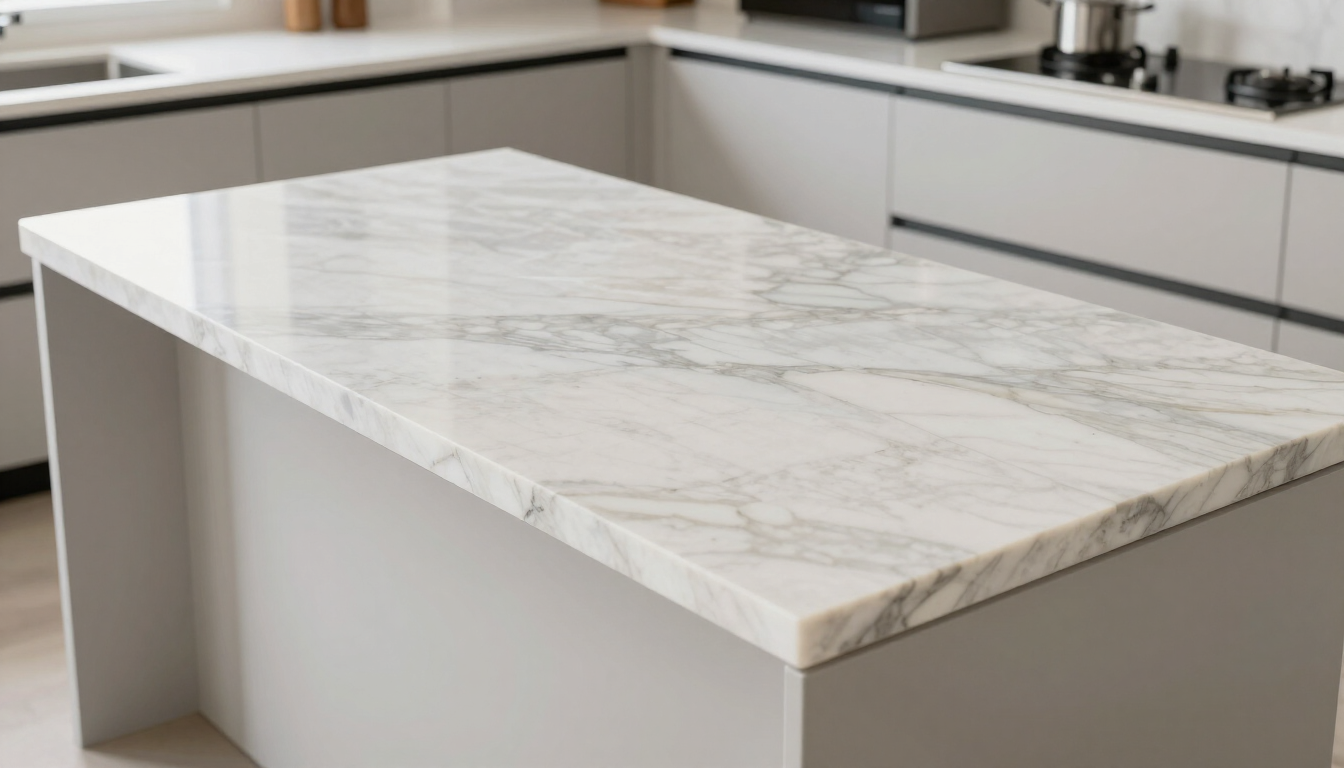
The first question: is it quartzite?
True quartzite is a hard, quartz-based stone. It doesn't react to acid. What often gets sold under the same name is a dolomitic or marble-family stone that looks nearly identical in the slab yard and etches like marble in the kitchen. The paperwork says quartzite either way.
We test before we touch it, because the two are restored differently. You can test it yourself too: one drop of lemon juice on a hidden spot. If it dulls, you have a marble-family stone. If nothing changes, it's true quartzite.
Did you know? Quartzite and quartz are not related. Quartzite is a rock. Quartz countertops are crushed stone in factory resin. They share a mineral and nothing else that matters, and the care is opposite.
What's fixable
If it's true quartzite
It behaves like granite, only harder. A dull top is a worn or coated finish, and it's re-polished. Stains draw out. Chips fill. Etching isn't on the list because it doesn't happen.
● Pro: worn finish, stains, chips
If it's a marble-family stone
It behaves like marble. Rings, splash marks, and dull patches are etching, and they come out the same way marble does: re-cut in steps and re-polished. A top covered in marks is the whole surface.
● Pro: etching, mechanical, in steps
Either way
Stains are drawn out with the right chemistry for that stone. Chips on edges and around the sink cutout fill and blend. Then the top is sealed.
● Pro
What isn't fixable is the same short list as any natural stone: a crack through the slab, or a stain that's had years to go deep in a light stone. Both show in a photo.
Did you know? Quartzite porosity swings a lot from slab to slab. Some takes sealer like granite. Some barely absorbs anything. The water test tells you which, and it's the only thing that should decide whether yours gets sealed.
How we restore it
Test first. Then the same process as the stone it turns out to be: stains drawn out, surface re-cut with diamond abrasives in steps until the damaged layer is gone and the finish is rebuilt evenly, chips filled and blended, whole top sealed. Nothing coated. What you get back is the stone, and now you know which stone it is.
Living with quartzite after
True quartzite: treat it like granite. Stone-safe cleaner, lift instead of drag, oil wiped up, water test and reseal when it fails. Marble-family "quartzite": treat it like marble, which means coasters, no acids, and accepting that it will etch again eventually.
● Homeowner: stone-safe cleaner, water test, coasters if it etches
● Pro: any etching, worn finish, set-in stains
Did you know? A store product labeled "safe for quartzite" was tested on true quartzite. If yours is the marble-family kind, the label doesn't apply to your counter.
Send a photo. See it restored.
Your own counter, marks gone, in your inbox. Plus what your stone actually is and what we'd do. No visit, no pressure.