It's crushed stone bound in resin, made in a factory, and the resin sets the rules. It doesn't etch, it doesn't need sealing, and it doesn't wear like marble or granite. What it does do is scratch, mark under heat, and react to harsh chemicals. Some of that polishes out. Some is permanent. We tell you which before any work begins.
What happens to quartz
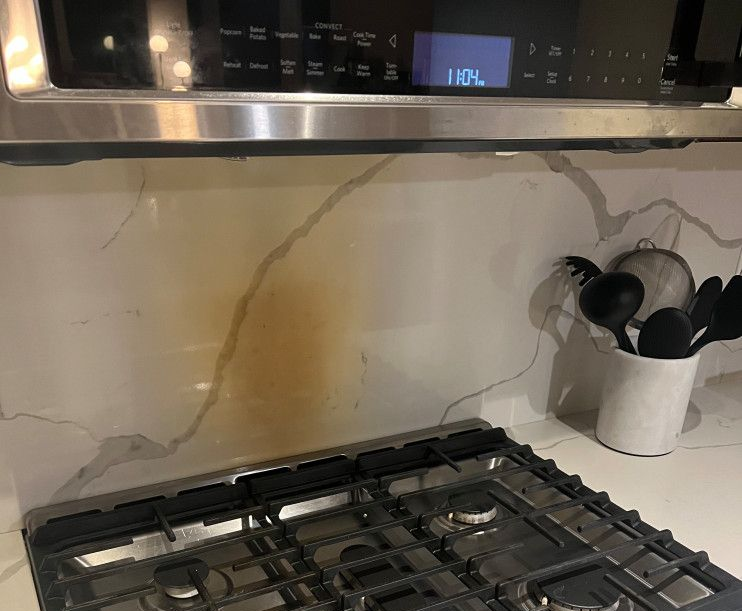
The shine on quartz is the factory finish on the resin, not a polish on stone. Three things damage it. Heat: a pan set down without a trivet marks or discolors the resin, and that's the most common quartz damage we see. Chemicals: bleach, oven cleaner, paint stripper, and strong degreasers attack the binder and leave a dull or discolored patch. Abrasion: scrub pads, powdered cleansers, and grit under pots leave fine scratches that flatten the sheen.
Water, wine, coffee, and oil mostly sit on the surface and wipe off. Quartz doesn't absorb.
Fine surface scratches and a flattened sheen polish out with the right abrasives and compounds for resin. Deeper scratches can be reduced. The finish is brought back to match the surrounding surface.
Pro: resin polishing, not stone polishing
Heat marks and chemical damage
This is the honest one. Light heat marks and shallow chemical dulling often polish out. Resin that's been scorched through, or discolored deep, is changed permanently. We can usually reduce it. We can't always remove it, and we'll say so from the photo.
Pro: reduced, sometimes removed, never promised blind
Chips and edge damage
Chips on edges and around the sink cutout fill and color-match. Small and clean chips blend well. Large or shattered chips are visible up close after repair.
Pro
What isn't fixable is discoloration that's gone through the resin, a crack through the slab, or a seam that's opened. We tell you that from the photo, before anyone books anything.
How we work on it
Differently from stone. Stone is re-cut in steps until a fresh surface comes up. Quartz resin is polished with compounds and pads made for it, at the sheen level of the factory finish, so the repaired area matches the rest of the top. Chips are filled with a color-matched resin. Nothing is sealed. Nothing is coated.
Living with quartz after
Quartz is the lowest-maintenance surface in this list, as long as three things are true: a trivet under anything hot, no bleach or harsh chemicals, and no abrasive pads. Mild dish soap, warm water, soft cloth. That's the whole routine.
Homeowner: trivets, mild soap, soft cloth, no harsh chemicals
Your own quartz, marks reduced or gone, in your inbox. Plus what we can and can't do, in plain English, before anyone comes out. No visit, no pressure.