

Granite restoration
Granite is tough. It isn't maintenance-free.
Nobody told you that at closing. Granite doesn't etch and it shrugs off heat, so it gets treated like it's indestructible, and ten years later the top by the sink is flat, the edges are chipped, and there's a dark patch where the olive oil lives. All of that is restorable, almost always to install-day condition.
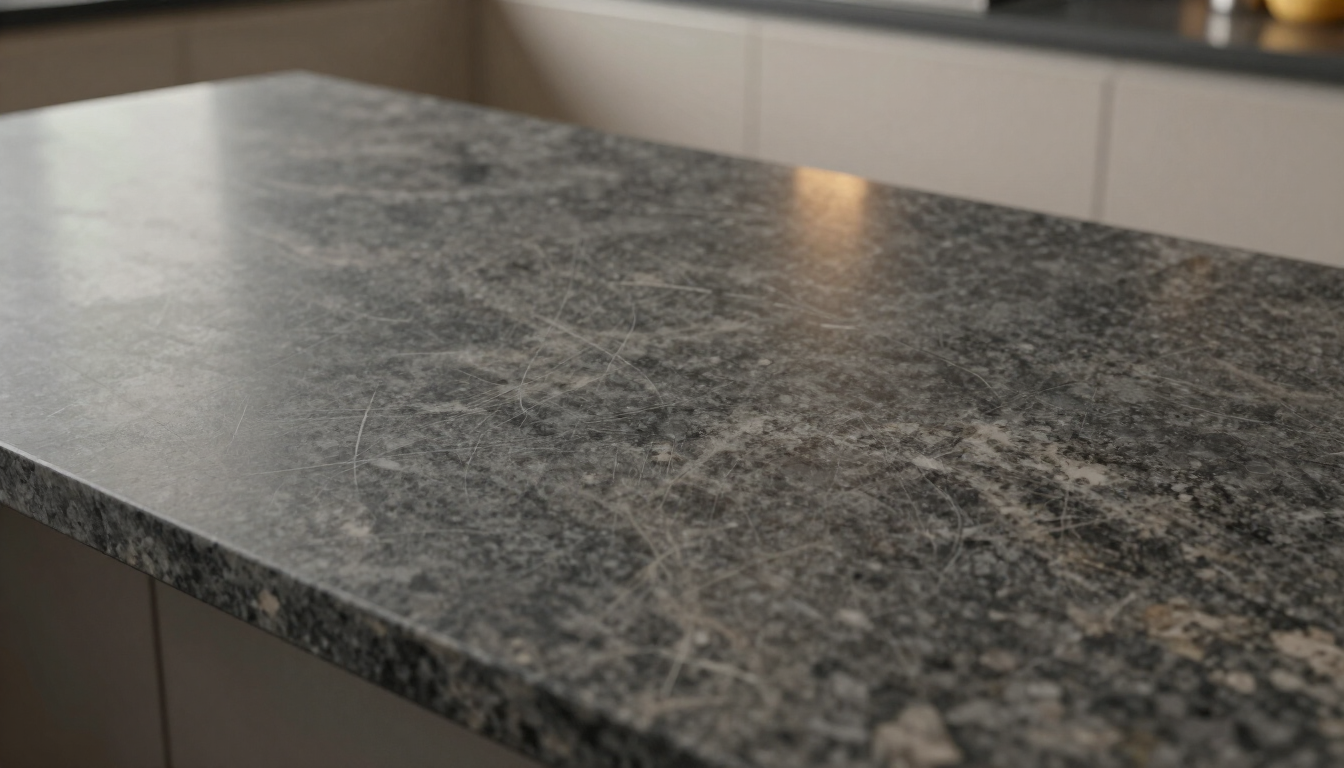
What happens to granite
Three things, and most granite tops have at least two. The seal wears off, and oil and grease get into the pores and stay. The finish wears down in the zones you use most, from grit under pots, abrasive pads, and years of wiping. And the store "polish" that was supposed to help builds up into a haze that reads as dull.
None of it is the stone failing. It's the surface and the seal doing what surfaces and seals do.
Did you know? Not all granite needs sealing on a schedule. Dense, dark granite can barely absorb anything, and sealer that has nowhere to go sits on top and hazes. The water test on the New Home Stone Guide tells you if yours is even taking sealer.
What's fixable
Oil and grease stains
The classic granite stain, and the one sealer exists to prevent. Set-in oil is drawn out of the stone with the right chemistry for that stone and that stain. Then the area is resealed, because the extraction takes sealer with it.
● Pro: extraction and reseal
Worn, hazy, or dull finish
If it's buildup from a store product or hard-water film, it strips off. If it's the finish itself worn down, it's re-polished. Most tired granite is a mix, and it all comes back in one visit.
● Homeowner: strip buildup with a stone-safe cleaner, then look again in low light
● Pro: the finish itself
Chips and edge damage
Chips on edges and around the sink cutout fill and blend to match the stone's color and pattern. Dull or rounded-over edges re-polish.
● Pro
Granite is the stone we most often bring back to install day. What isn't fixable is a crack through the slab or a seam that's failed structurally. Both are rare and both are obvious in a photo.
Did you know? Granite doesn't etch from kitchen acids. If your granite has rings where glasses sat, it's either hard-water residue that wipes off, or it isn't granite. The stone identifier settles it in a minute.
How we restore it
Stains are drawn out first. Then the surface is re-cut with diamond abrasives in steps, coarse to fine, until the worn or damaged layer is gone and the reflection comes back evenly, edge to edge. Chips are filled and blended. Then the whole top is sealed with a penetrating sealer and the excess is taken off before it can haze. Nothing is coated. What you get back is the stone.
Living with granite after
Granite is the easiest of the natural stones to keep. Stone-safe cleaner, soft cloth, lift instead of drag, oil wiped up the same day. Sealing is something you can do yourself, and the water test tells you when. What you can't do is fix a worn finish or lift a set-in stain, and that's where we come back in.
● Homeowner: stone-safe cleaner, lift pots, wipe oil same day, water test and reseal when it fails
● Pro: worn finish, set-in stains, chips
Did you know? "Granite polish" from the store isn't polish. It's a topcoat. The first coat looks great. The tenth is the haze that brought you to this page.
Send a photo. See it restored.
Your own granite, finish back, stain gone, in your inbox. Plus what we see and what we'd do. No visit, no pressure.